
How to Play Faro
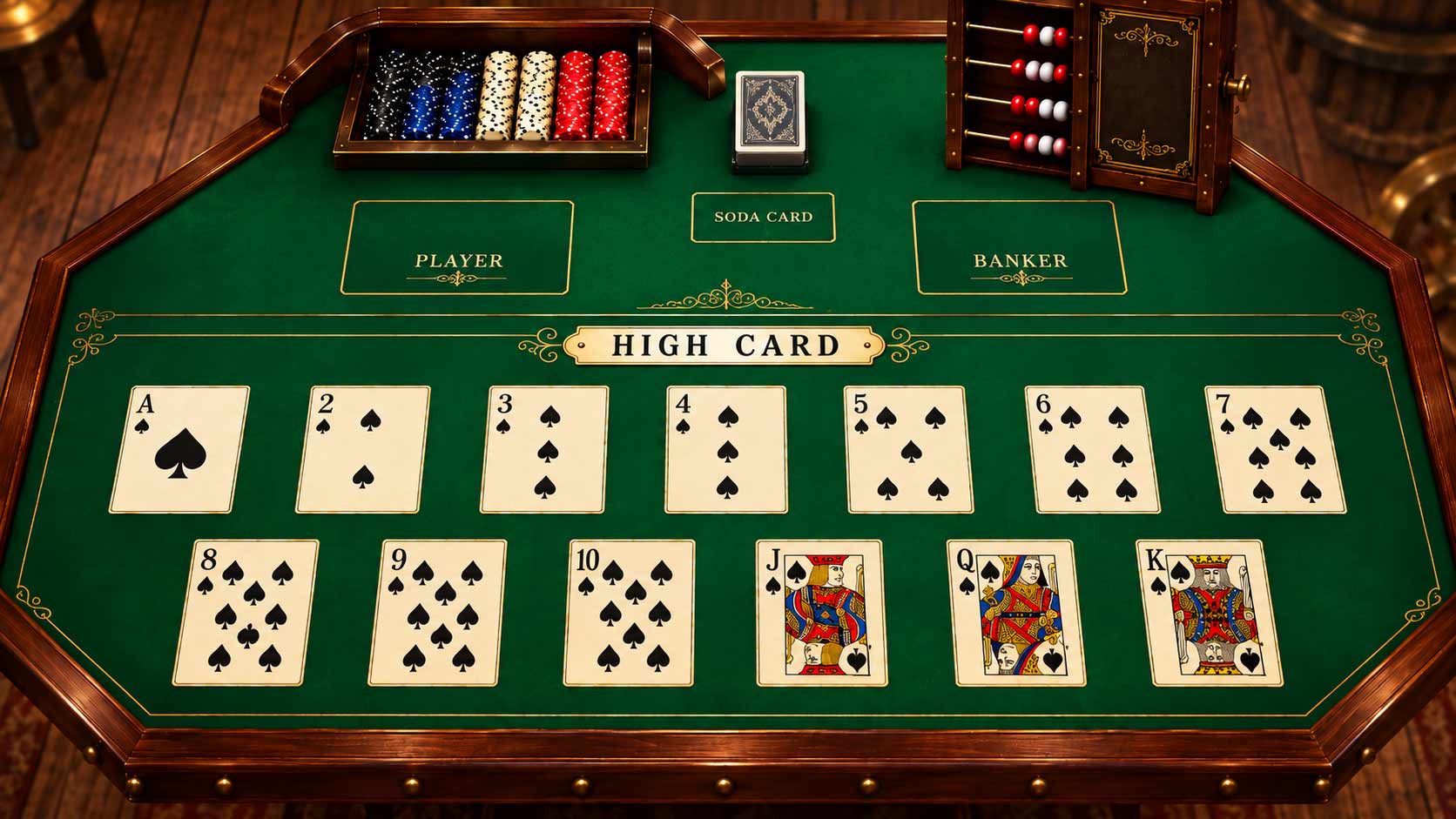
- Place your bets. Choose a $1, $5, $10, or $25 chip, then click any rank on the table. You may bet on more than one rank.
- The banker card is dealt first. If its rank matches your normal wager, that wager loses.
- The player card is dealt second. If its rank matches your normal wager, you win an equal amount and your original wager stays on the table.
- If neither card matches your rank, the wager remains in place for the next deal.
- Copper reverses a wager. Select Copper and click an existing wager. A coppered bet wins on the banker card and loses on the player card.
- A split occurs when both dealt cards have the same rank. The bank takes half the wager. If the wager is odd, the extra dollar goes to the bank. The remainder stays in play.
- Take Back removes only the wager you click. Clear Bets returns all live wagers to your stake.
- Calling the Turn. When three cards remain, the ordinary game stops. The three remaining cards are shown in random order. Call the order you think they will appear: Banker, Player, then Hock.
About Faro
Faro was a popular banking card game in 19th-century America and became closely associated with gambling halls and saloons of the Old West. Unlike poker, players did not compete against one another; they wagered against the dealer's bank.
The table displayed thirteen ranks — Ace through King — and players placed their wagers directly on those ranks. The dealer exposed cards in pairs: the first card favored the bank and the second favored the players.
Faro was often associated with the expression "bucking the tiger." The rules were quick to learn, the action moved fast, and several bets could remain on the layout from one turn to the next.
This TombstoneWeb version is intended as a recreational, historically inspired game. No real money is wagered.